
Loading.
Keeping, enclosures, feeding, moulting and shipping.
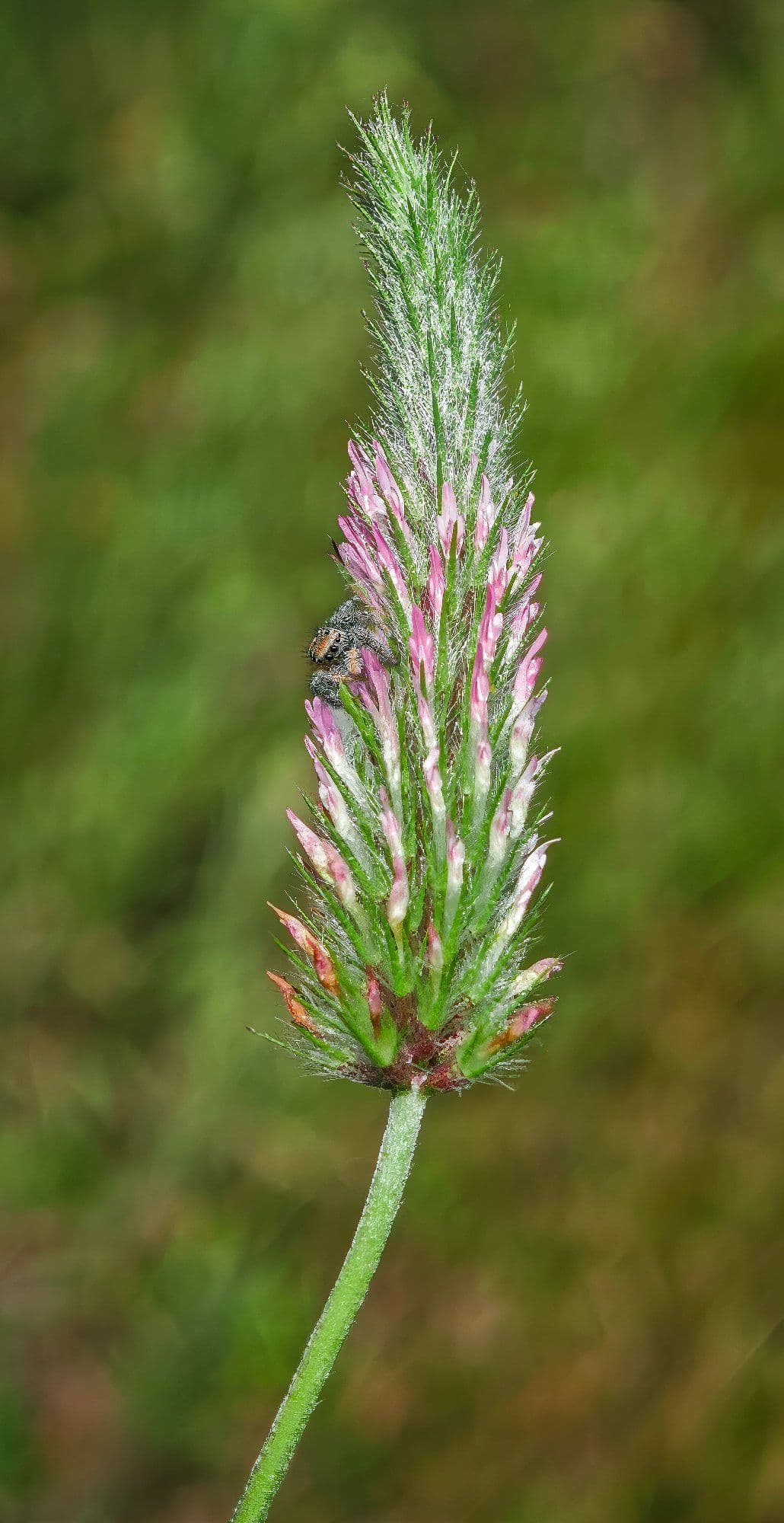
Most of the species kept as pets are between 4 and 18mm as adults. Phidippus regius, the biggest commonly kept species, tops out around 18-22mm for a mature female — roughly the size of a thumbnail. Males stay noticeably smaller.
Vertical space matters more than floor space — these are ambush hunters that climb and build hammocks near the top. A 10-15cm tall enclosure with cross-ventilation and a few anchor points for webbing suits an adult. Escape-proof matters: an adult can fit through a surprisingly small gap.
Adults eat every 3-4 days; spiderlings eat more often, roughly every other day. Feeders should be no longer than the spider's body. Remove anything uneaten within a day — a loose cricket will harass a spider that is about to moult.
Almost always it is about to moult. A spider in pre-moult seals itself into a thick hammock, refuses food, and may stay in there for one to two weeks. Do not open the hammock, do not offer food, and keep humidity steady. Interrupting a moult is one of the few things that reliably kills an otherwise healthy spider.
In a vented deli cup packed with tissue to prevent movement, inside an insulated box, overnight only. Shipping pauses when temperatures at either end fall outside roughly 4-32C — a spider that arrives cold usually does not recover, and no amount of packing beats simply waiting for a better week.